
September 23 | Animation Technology
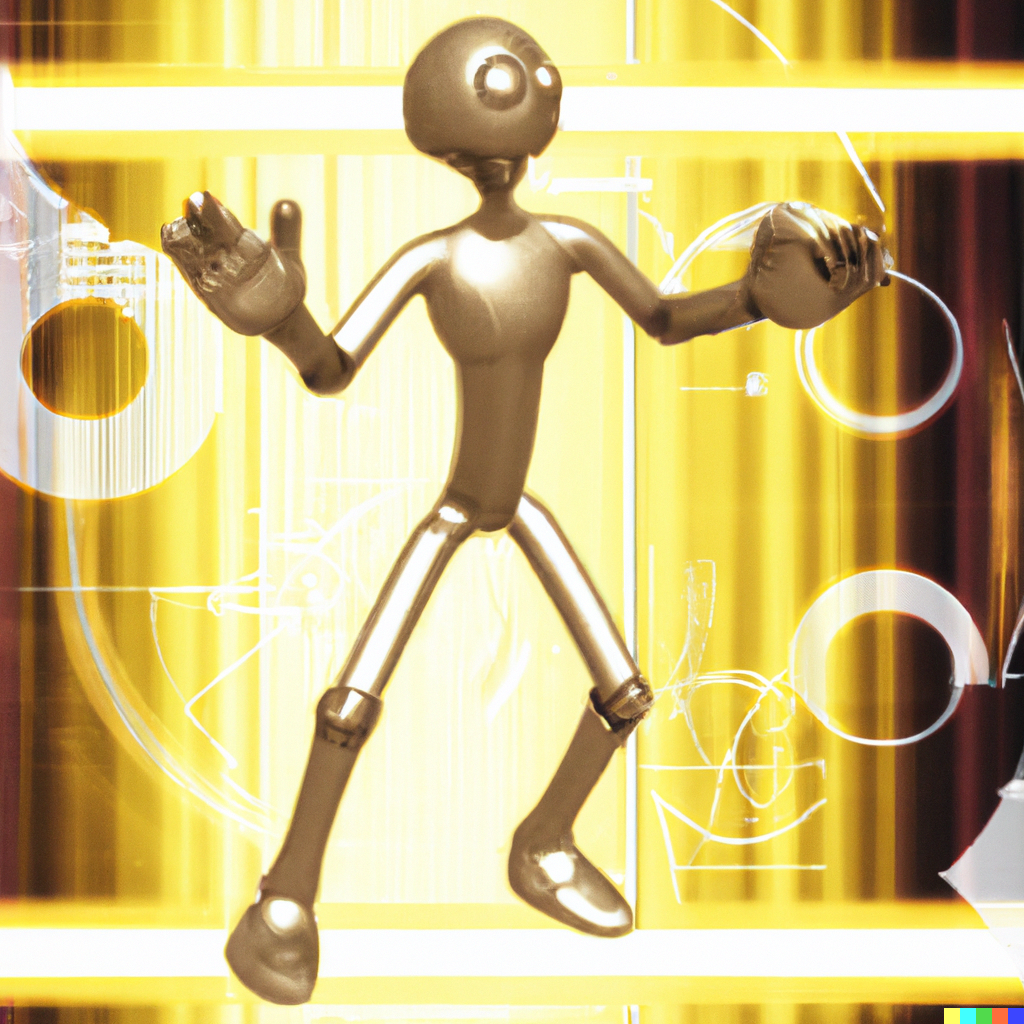
Animation has always been a meeting point between art and technology. From hand-drawn frames created one image at a time to today's sophisticated digital productions, every major advancement in animation has changed the way artists tell stories.
Today, a new generation of tools is reshaping the industry once again. Animation Technology, or AnimeTech, brings together artificial intelligence, 3D graphics, real-time rendering, motion capture, virtual production, cloud computing, procedural animation, and advanced software to make animation faster, more interactive, and increasingly sophisticated.
AnimeTech is not simply about making cartoons. It is becoming a broad technological ecosystem that supports anime, films, television, video games, advertising, virtual characters, educational content, social media, simulations, and immersive experiences.
This article explores what AnimeTech means, the technologies behind it, how it is changing animation production, its advantages and challenges, and what the future may look like.
Animation Technology (AnimeTech) refers to the collection of digital technologies, software, hardware, workflows, and techniques used to create, manipulate, render, distribute, and experience animated content.
It includes traditional digital animation tools as well as emerging technologies such as:
The term can therefore describe everything from the software an animator uses to draw a character to the computing infrastructure required to render a feature-length animated movie.
Animation technology has developed alongside advances in computing.
Early animation depended heavily on physical artwork. Artists created individual drawings that were photographed or scanned and displayed sequentially to create the illusion of movement.
This process required enormous amounts of manual work.
A short sequence could involve hundreds or thousands of individual drawings. Maintaining consistency between frames was challenging, and revisions could be expensive and time-consuming.
Nevertheless, traditional animation established many of the artistic principles still used today, including:
Modern technology has not eliminated these principles. Instead, digital tools have provided new ways to implement them.
Computers transformed the traditional workflow by allowing artists to draw, color, edit, and composite animation digitally.
Instead of physically painting every frame, artists could use software to create digital drawings and layers.
Digital 2D animation introduced capabilities such as:
This significantly reduced the amount of repetitive work involved in production.
The development of 3D graphics introduced another major shift.
Instead of drawing every frame, artists could construct a three-dimensional character or environment and then animate it inside a virtual space.
A typical 3D workflow may include:
Modeling → Texturing → Rigging → Animation → Lighting → Rendering → Compositing
A 3D character can be reused across many scenes, making certain production tasks more efficient.
3D animation also opened the door to complex camera movements, realistic lighting, physical simulations, and interactive environments.
Modern animation is built from many interconnected technologies.
Artificial intelligence is becoming one of the most discussed developments in animation.
AI systems can assist with tasks such as:
One important distinction is that AI does not necessarily replace the animator.
In many workflows, AI can function as an assistive technology that handles repetitive or computationally intensive tasks while human artists retain creative control.
For example, an animator may establish key poses while software helps generate intermediate motion that the artist can then refine.
This can potentially allow artists to spend more time on acting, composition, storytelling, and visual direction.
Traditional animation pipelines often require scenes to be rendered before artists can see the final result.
Real-time rendering changes this workflow.
Modern graphics engines can display highly detailed environments and characters interactively, allowing creators to see changes almost immediately.
Real-time technology is particularly important for:
Instead of waiting for a lengthy rendering process after every major change, artists can increasingly work in an environment where lighting, cameras, characters, and environments respond immediately.
This creates a more interactive production process.
Motion capture, commonly called mocap, records physical movement and translates it into digital animation data.
An actor can perform a movement while sensors or cameras track their body.
The captured information can then be applied to a digital character.
Motion capture can be used for:
However, captured motion is not necessarily the finished animation.
Animators may need to clean the data, exaggerate movements, adjust timing, correct poses, and adapt the performance to the character.
This creates a powerful combination of human performance and digital artistry.
The face is one of the most difficult parts of a character to animate convincingly.
Modern systems can track facial movements using cameras and specialized sensors.
These systems can capture details such as:
The resulting data can drive a digital character.
Facial capture is particularly useful when storytelling depends heavily on subtle emotional performances.
It can also be combined with artificial intelligence to automate or enhance certain aspects of facial animation and lip synchronization.
Procedural animation uses rules, algorithms, or systems to generate movement.
Instead of manually specifying every movement, an animator can define relationships and behaviors.
For example, a procedural system could control how:
Procedural animation is especially useful when a scene contains large numbers of objects or characters.
Imagine animating thousands of characters individually in a crowd scene. That would require enormous manual effort.
A procedural system can generate variations based on predefined rules.
Physics simulation allows digital objects to behave according to simulated physical principles.
This technology can be used for:
Instead of manually animating every piece of fabric, for example, an artist can use a simulation to calculate how the material should move as a character walks.
Artists can then adjust the simulation to achieve the desired artistic result.
This combination of physics and artistic control is one of the defining characteristics of modern animation.
Virtual production combines physical filmmaking techniques with digital environments and real-time graphics.
Actors may perform on a physical stage surrounded by large digital displays or tracked virtual environments.
Instead of filming against a simple green screen and creating the environment later, filmmakers can see the digital environment during production.
This approach can improve:
Although virtual production is often associated with live-action filmmaking, many of its underlying technologies are relevant to animation and hybrid productions.
SHARE THIS:
© Copyright 2026Global Tech AwardsAll Rights Reserved