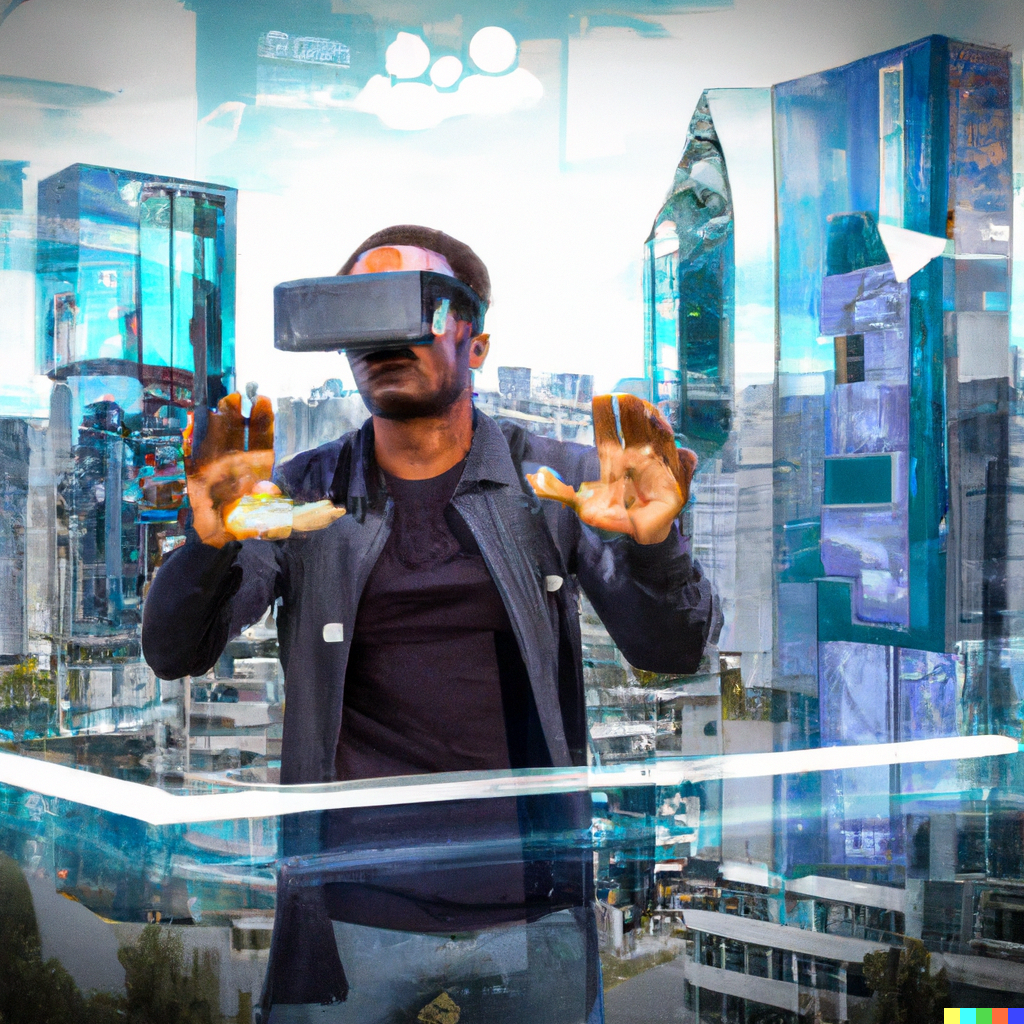
This article provides a clear and engaging overview of Augmented Reality (AR), Virtual Reality (VR), and Mixed Reality (MR), explaining how each technology works, their key differences, and real-world applications across industries like healthcare, education, retail, and manufacturing. It highlights the latest advancements, challenges, and future trends shaping the rapidly evolving world of immersive technologies.
Extended Reality (XR)—an umbrella term covering Augmented Reality (AR), Virtual Reality (VR) and Mixed Reality (MR)—is reshaping how we interact with information, entertainment, and the world around us. From immersive gaming to advanced industrial simulations, AR/VR/MR technologies are no longer futuristic concepts; they are rapidly becoming part of our everyday lives.
This article breaks down each technology, how it works, real-world applications, and what the future holds.
1. Understanding the XR Spectrum
Augmented Reality (AR)
AR overlays digital elements—such as text, graphics, or 3D objects—onto the real world. Users still perceive their physical surroundings, but with an enriched digital layer on top.
How AR Works
- Utilizes camera sensors, GPS, depth mapping, and computer vision
- Detects surfaces or markers
- Places digital assets in real-world coordinates
Popular Uses
- Mobile AR apps & filters
- Interior design tools overlaying furniture into rooms
- Educational apps showing 3D models in the real world
- Industrial maintenance or training overlays
Virtual Reality (VR)
VR places the user inside a fully digital environment using a headset that blocks out the physical world.
How VR Works
- Head-mounted displays (HMDs) with stereoscopic displays
- Motion tracking via gyroscopes, external sensors, or inside-out tracking
- Hand controllers or hand-tracking for interaction
Popular Uses
- Immersive gaming
- Virtual travel & tourism
- Workforce training (e.g., medical or mechanical simulations)
- Therapy for phobias or stress management
Mixed Reality (MR)
MR blends physical and digital worlds—digital objects interact with your real environment in real time. Unlike AR, MR elements behave as if they belong in your physical space.
How MR Works
- Spatial mapping with advanced sensors
- Eye tracking + hand tracking
- High-level processing for real-time object occlusion and physics
Popular Uses
- Collaborative 3D design
- Industrial remote assistance
- Advanced training simulations
- Interactive holographic interfaces
2. Key Differences at a Glance
| FeatureAugmented Reality (AR)Virtual Reality (VR)Mixed Reality (MR) |
| Reality Level | Real world + digital overlay | Fully virtual environment | Real + virtual merged with interaction |
| Device | Phone, tablet, smart glasses | VR headsets | MR headsets, advanced sensors |
| Immersion | Low–Medium | High | Medium–High |
| Interaction with Real World | Yes | No | Yes (with spatial understanding) |
| Accessibility | Very accessible | Moderately accessible | Less accessible today |
3. Current Real-World Applications Transforming Industries
Healthcare
- VR surgery simulations
- AR-assisted medical procedures
- MR for anatomy training & telemedicine collaboration
Education
- Virtual field trips
- AR-enabled textbooks
- MR labs for STEM experimentation
Manufacturing & Engineering
- AR instructions for assembly lines
- MR-assisted digital twins
- VR for prototyping and stress-testing
Retail & E-commerce
- Virtual try-ons (clothes, makeup, accessories)
- AR visualization of products in homes
- VR shopping environments
Entertainment & Gaming
- Immersive storytelling
- Location-based AR gaming
- VR multiplayer worlds
Real Estate & Architecture
- VR walkthroughs for unfinished spaces
- AR overlays for renovations
- MR collaborative design sessions
4. Technologies Powering AR/VR/MR
Core Components
- Optics & Displays: lenses, waveguides, and high-resolution microdisplays
- Tracking Systems: SLAM (Simultaneous Localization and Mapping), depth sensors
- Input Methods: controllers, hand tracking, eye tracking, voice recognition
- Graphics & Rendering Engines: real-time 3D engines (e.g., Unity, Unreal Engine)
- Cloud & AI: object recognition, spatial anchoring, and multi-user sync
5. Challenges Facing XR Technologies
Hardware Limitations
- Heavy headsets
- Battery life
- Field-of-view limitations
Motion Sickness / User Comfort
- Latency between head movement and display update
- Poorly optimized apps
Content Development
- Creating 3D assets takes time
- Need for cross-platform XR standards
Privacy Concerns
- Spatial mapping collects sensitive environmental data
- Eye-tracking introduces biometric privacy issues
6. The Future of XR: What’s Coming Next?
Ultra-lightwear Headsets
Expect glasses-like devices with:
- High transparency waveguides
- On-device processing powered by custom XR chips
Full-body Tracking & Haptics
Haptic suits, gloves, and even neural interfaces will enhance immersion.
AI-Driven Mixed Reality
AI will enable:
- Smarter object recognition
- Context-aware overlays
- Real-time holographic assistants
Metaverse-Ready Ecosystems
Social VR spaces, digital commerce, and interoperable avatars will redefine online experiences.
Enterprise Adoption
Training, collaboration, and digital twinning will drive MR’s biggest growth.
7. Final Thoughts
AR, VR, and MR are no longer futuristic concepts—they are transformative tools reshaping industries, creativity, and human interaction. As devices become more powerful, lightweight, and affordable, XR will eventually blend seamlessly into everyday life—much like smartphones and the internet before it.
Whether you're a developer, business leader, or enthusiast, understanding AR/VR/MR now means positioning yourself at the forefront of a rapidly evolving digital revolution.