
February 09 | Construction Technology ConTech
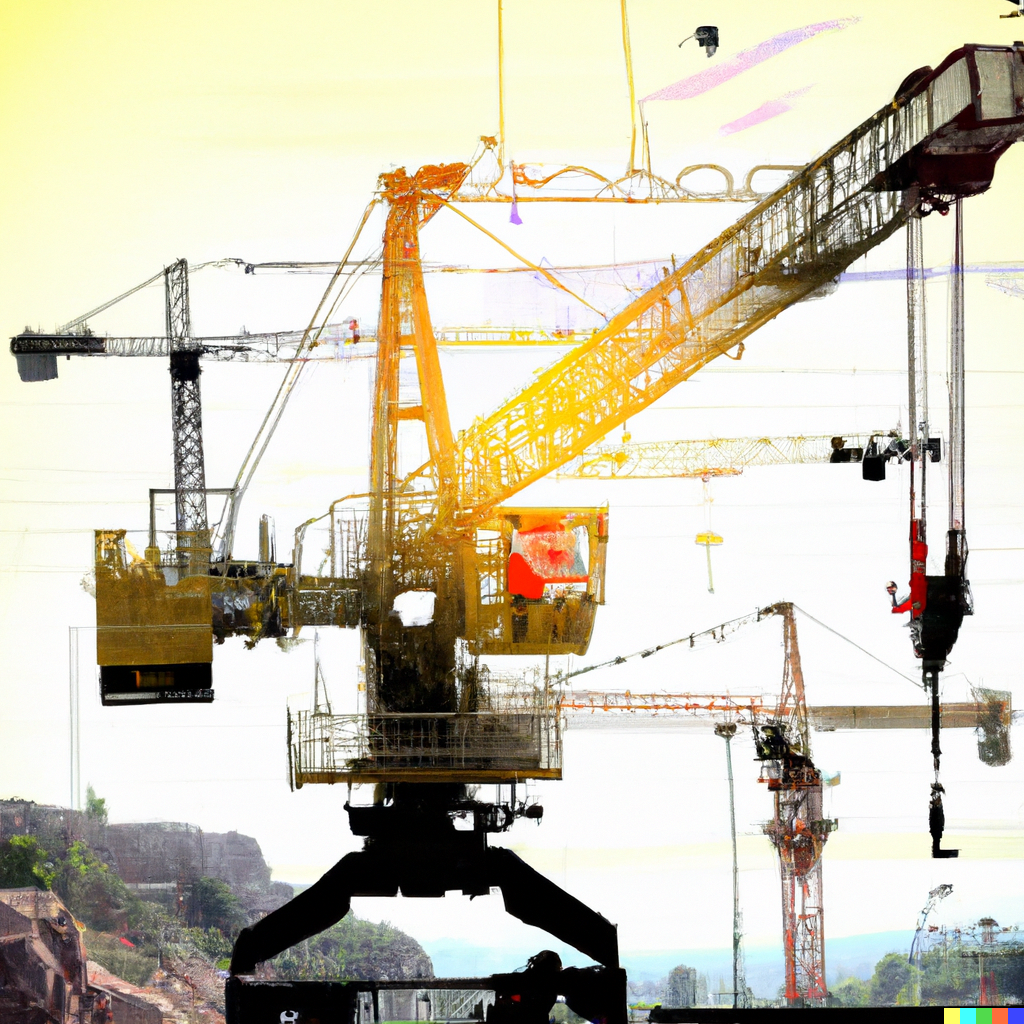
Construction—one of the world’s largest and oldest industries—is undergoing a digital transformation unlike anything in its history. Long defined by manual processes, fragmented communication, and slow adoption of new tools, the construction sector is now rapidly embracing Construction Technology (ConTech) to meet the rising demands of cost efficiency, sustainability, and labor productivity.
In this article, we dive into the evolution of ConTech, the technologies driving it, the challenges ahead, and what the future of the built environment may look like.
The construction industry faces three defining challenges:
Construction productivity has remained largely stagnant for decades, often growing slower than the broader economy. Inefficiencies in project coordination, change order management, and labor shortages make it difficult to keep projects on time and on budget.
As older workers retire and fewer younger workers enter the trades, digital tools are becoming critical for increasing productivity with smaller teams.
Governments and clients want low-carbon buildings, better energy performance, and reduced material waste—targets difficult to meet without better data and tighter project control.
ConTech aims to solve these issues by integrating advanced tools across the entire construction lifecycle—from design through operations.
BIM has evolved from 3D models to intelligent, dynamic digital twins that integrate design, scheduling, cost, and operational data.
Benefits:
BIM is increasingly the foundation upon which other ConTech tools integrate.
Robotic solutions are entering jobsites to improve precision and safety.
Leading use cases include:
Automation reduces repetitive work, addresses labor shortages, and minimizes errors.
Internet of Things (IoT) devices now track materials, equipment, and worker safety in real time.
Common applications:
These tools improve safety and allow for data-driven jobsite management.
Cloud-based platforms streamline communication, project documentation, supply chains, and financial workflows.
Popular features:
These systems reduce admin burdens and create a single source of truth.
Artificial intelligence is transforming everything from scheduling to safety.
Capabilities include:
AI augments human decision-making, enabling teams to spot issues early and plan more effectively.
AR/VR improves design comprehension and enhances field execution.
These tools bridge the gap between digital models and the physical world.
Digital platforms allow teams to communicate seamlessly across geographies, reducing delays and misunderstandings.
Automated workflows and data visibility reduce rework—historically estimated at 5–10% of total project costs.
Drones, wearables, and predictive analytics decrease accidents and create safer jobsites.
Advanced modeling and monitoring ensure precision, consistency, and long-term building performance.
Despite rapid innovation, adoption is uneven. Key barriers include:
Construction relies on diverse stakeholders—owners, architects, engineers, subcontractors—each with their own tools and interests.
Traditional workflows and risk-averse cultures can slow innovation.
Many firms struggle to justify the upfront investment in technology and training.
Data interoperability remains a challenge, especially when integrating multiple platforms.
End-to-end digital models will be used not only for design but also for operations, maintenance, and lifecycle sustainability.
Robots, drones, and automated equipment will eventually perform entire phases of construction with minimal human input.
AI assistants will help generate optimized schedules, detect constructability issues, and ensure code compliance.
Carbon accounting and material tracking will become standard, enabling greener buildings and more responsible construction.
Prefabrication and modular building processes will rise as digital fabrication technologies mature.
Construction Technology is no longer optional—it is essential for a more efficient, sustainable, and resilient industry. As ConTech continues to evolve, companies that invest today will gain a competitive edge tomorrow. The winning formula will combine digital tools, data-driven decision-making, and a culture that embraces innovation.
SHARE THIS:
© Copyright 2026Global Tech AwardsAll Rights Reserved